Shocking Trend in South Africa: Cases of Girls Aged 10–14 Becoming Pregnant
Bloemfontein : Incidents that bring shame upon humanity are emerging from South Africa. A heart-wrenching reality has come to light in this country, where a large number of underage girls

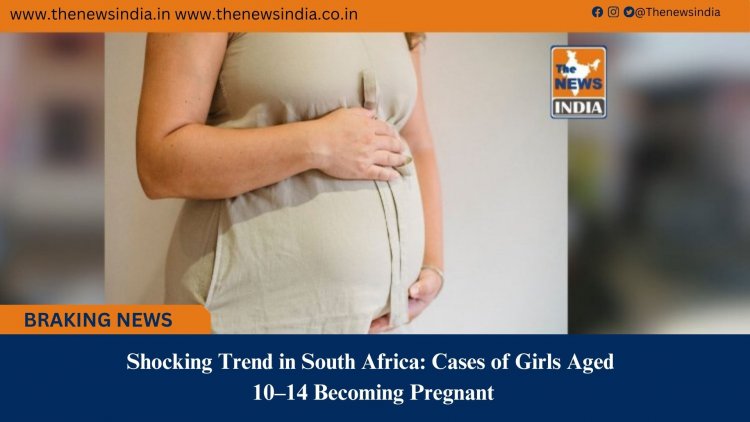
Bloemfontein : Incidents that bring shame upon humanity are emerging from South Africa. A heart-wrenching reality has come to light in this country, where a large number of underage girls are being forced to carry pregnancies to term. Here, girls aged 10 to 14 are becoming mothers—a sight that has become shockingly commonplace in hospitals. According to data from the Department of Health, 2,103 girls aged 10 to 14 gave birth in 2024.
In total, 98,351 girls under the age of 19 gave birth, a figure that includes this youngest age group. Data for the 2024-25 period reveals that a total of 117,195 girls aged 10 to 19 became mothers, with more than 1,400 of them falling within the 10-to-14 age bracket. This issue is most acute in the Eastern Cape and KwaZulu-Natal provinces; in the Eastern Cape alone, between April and July 2025, 117 girls aged 10 to 14 became mothers.
These statistics represent only the recorded births; in reality, many pregnancies either end prematurely or go unreported, meaning the true magnitude of the problem could be even more alarming. Experts emphasize that pregnancy in girls aged 10 to 14 is almost invariably a case of sexual abuse or statutory rape, as consent given by children at this age is not considered legally valid. There are several complex factors underlying this grave crisis.
Poverty and social inequality lie at the root of the problem, where young girls often fall victim to exploitation due to a lack of better alternatives. A lack of education and high school dropout rates render girls vulnerable, as education plays a crucial role in empowering them and raising awareness regarding their rights. A lack of access to sexual education and family planning services also contributes to unintended pregnancies. Furthermore, child marriage and certain cultural pressures also exacerbate this problem. Rising incidents of domestic violence and sexual abuse—particularly among girls from vulnerable backgrounds—push them into this predicament. The disruptions to schools and health services following the COVID-19 pandemic have further worsened the situation.
This takes a profound physical and psychological toll on these young mothers. Physically, the bodies of these young girls are not prepared for pregnancy and childbirth, posing a grave risk to the lives of both the mother and the child. The birth of low-weight babies, complications during delivery, and long-term health issues are common occurrences. The disruption to their education jeopardizes their future, trapping them in a vicious cycle of poverty.
In many instances, these young girls are themselves unable to care for the infant, which in turn has a negative impact on the child's development. The South African government and the Department of Health recognize the gravity of this issue. Expressing his deep concern, Deputy Minister Andries Nel stated that these are young girls who ought to be attending school, making friends, and playing—rather than becoming mothers. The government is currently implementing initiatives involving sex education in schools, condom distribution, and awareness campaigns.(Agency)